
 EN
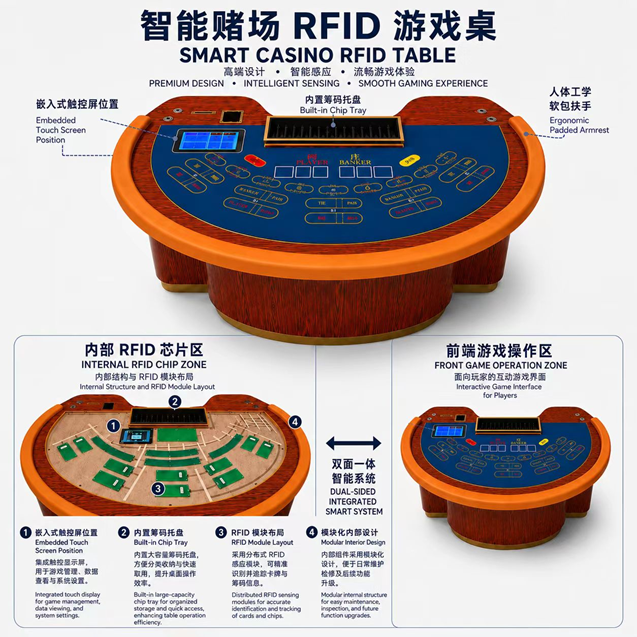
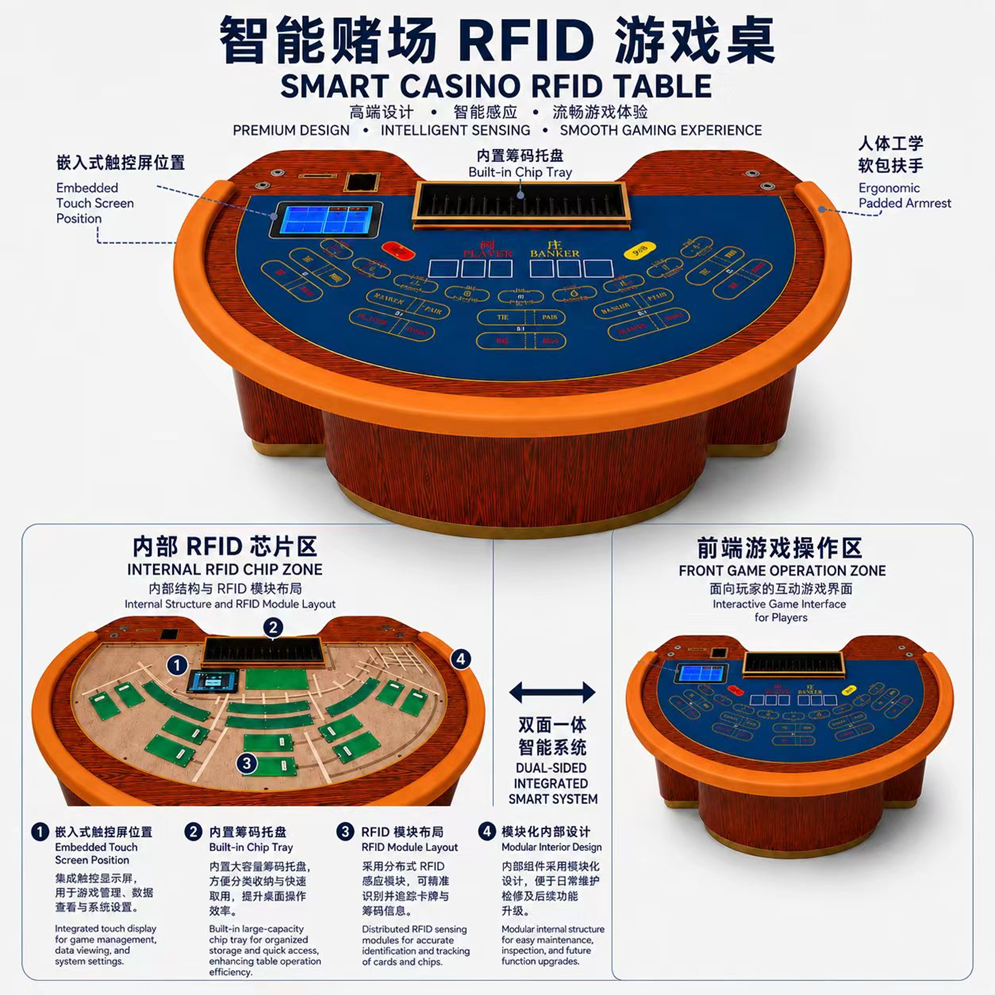
RFID • Smart Shoe • Camera Recognition • RFID Chips • Cage System • Analytics • Technical Support
Prepared as a conceptual technology presentation. Final equipment, interfaces, recognition performance and regulatory acceptance are subject to project validation and casino requirements.
1. Executive Overview
The Smart Table platform is designed to connect the physical live-table game with digital recognition, monitoring and operational systems. It combines RFID-enabled wagering, card recognition, table-side computing and centralized casino management functions.
- RFID-enabled betting and chip identification at defined table zones.
- Two card-capture options: integrated Smart Shoe or pole-mounted camera recognition.
- Real-time game-event processing, exception monitoring and operational analytics.
- Connectivity to surveillance, casino management, cage and authorized reporting systems.Deployment supported by installation, calibration, testing, training, preventive maintenance and technical escalation.
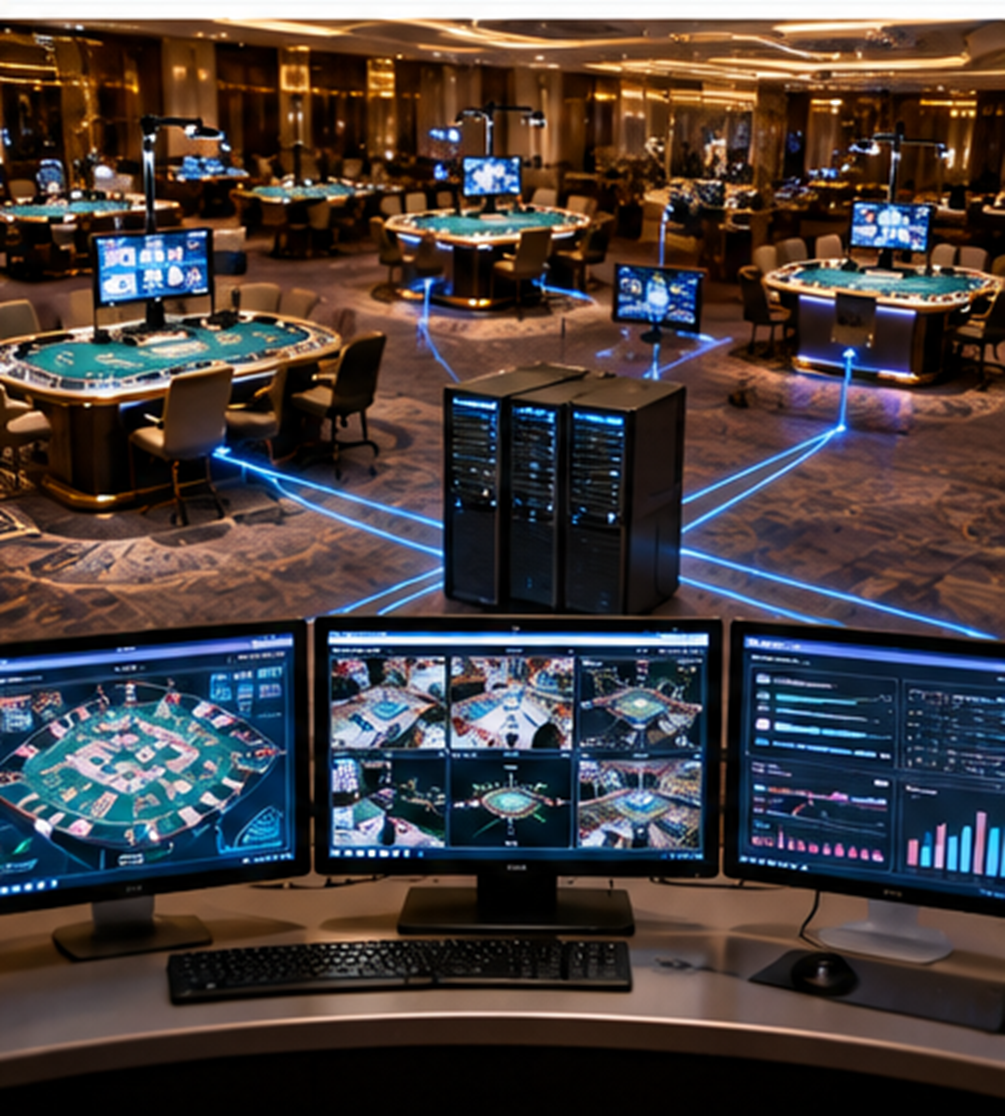
Illustrative casino technology environment.
2. Smart Table Architecture
The architecture is organized in five layers:
|
Layer |
Function |
|
Table Edge |
RFID antennas/readers, Smart Shoe or pole camera, dealer display, chip tray and table devices. |
|
Edge Controller |
Device interfaces, local buffering, time synchronization and table-side processing. |
|
Recognition & Game Logic |
Card recognition, bet-state correlation, hand/game-state processing and rule validation. |
|
Platform Services |
Event database, alerts, analytics, reporting and API services. |
|
Casino Systems |
Surveillance, CMS/table management, cage, dashboards and approved external integrations. |
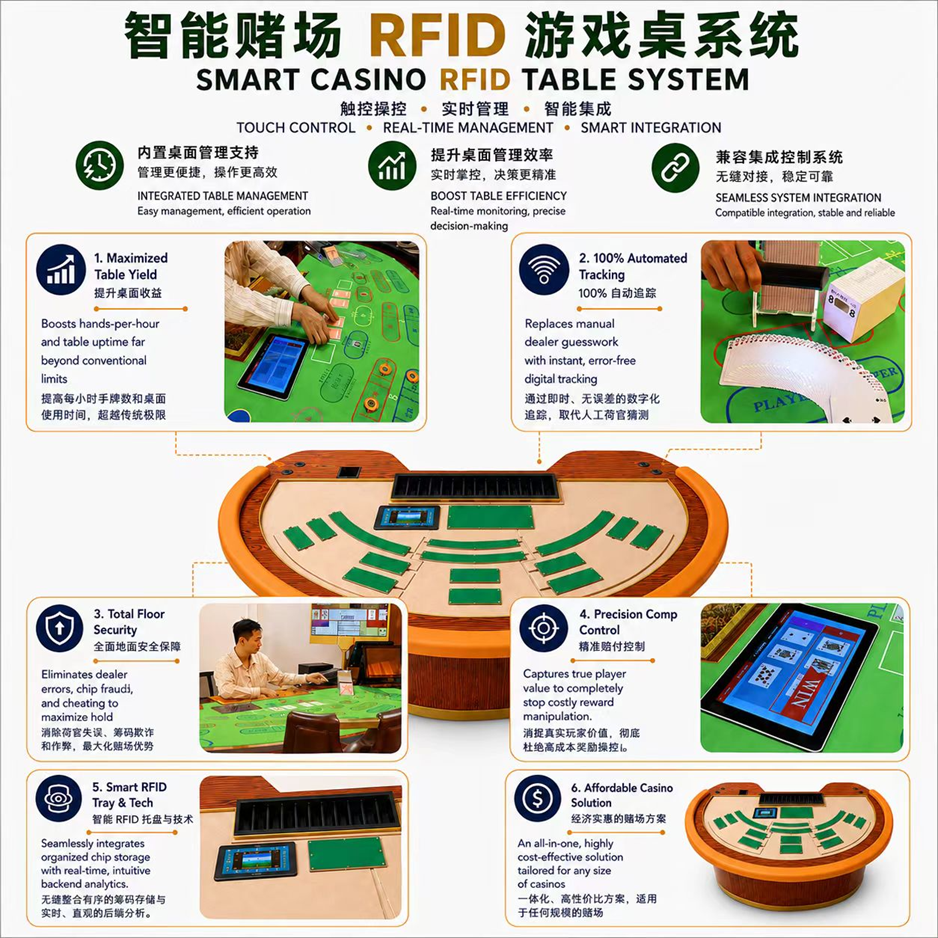
Illustrative Smart Table with camera pole and table-side display.
3. Smart Table Hardware
- RFID sensor/antenna zones integrated beneath the playing surface.
- RFID-compatible casino chips with unique electronic identities.
- Dealer chip tray and optional smart tray reader.
- 11-inch dealer/operator display and status interface.
- Pole-mounted camera positioned over the playing/dealing area.
- Smart Shoe interface where direct card recognition is selected.
- Local controller, network interface, protected power and equipment enclosure.
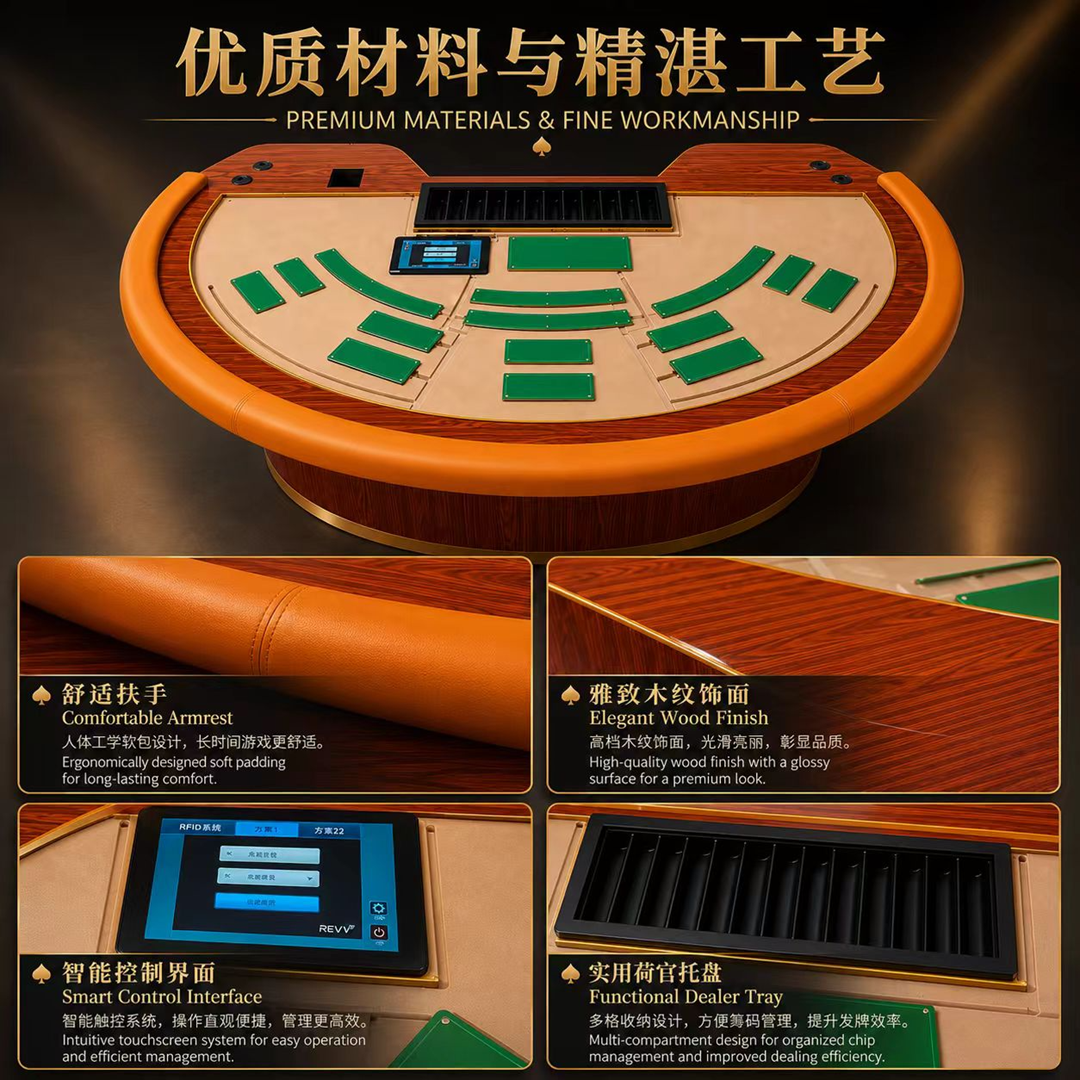
Smart Table concept - illustrative image.
4. Dual Card-Recognition Design
Mode A - Smart Shoe
The Smart Shoe provides direct electronic card/game-event capture. It is the preferred configuration when the selected shoe can be integrated with the table platform. Typical benefits include structured card events, low-latency game data and direct synchronization with game logic.
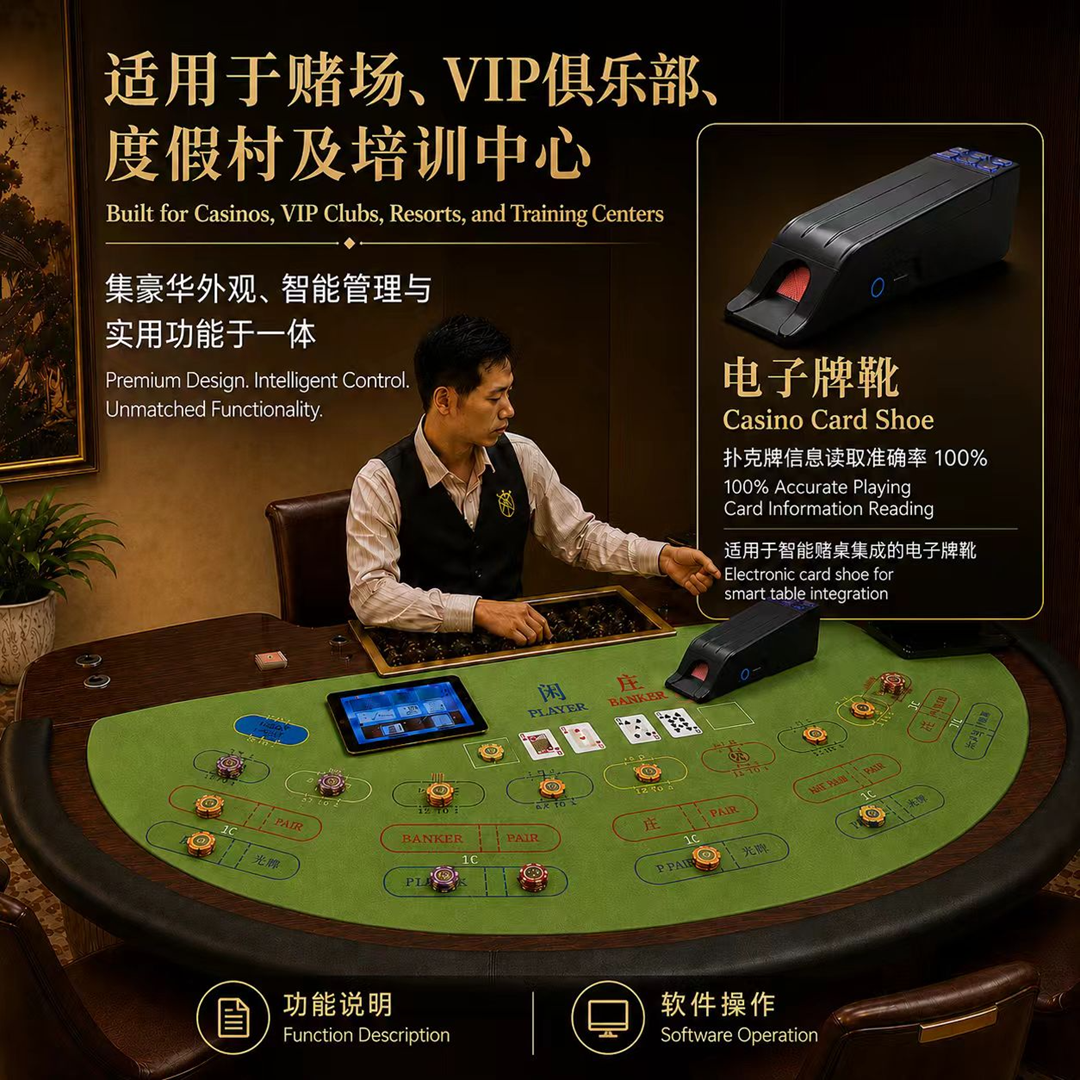
Smart Shoe - illustrative image.
Mode B - Camera on Pole
When a Smart Shoe is not installed, a camera mounted on the table pole can observe the designated playing/dealing area. A computer-vision recognition engine interprets visible card information and forwards recognized events to the Smart Table game-logic layer. The casino can therefore retain a conventional shoe while still enabling digital game recognition.
Camera recognition must be calibrated and validated under actual operating conditions, including camera angle, card visibility, lighting, occlusion, dealing speed and recognition-confidence thresholds.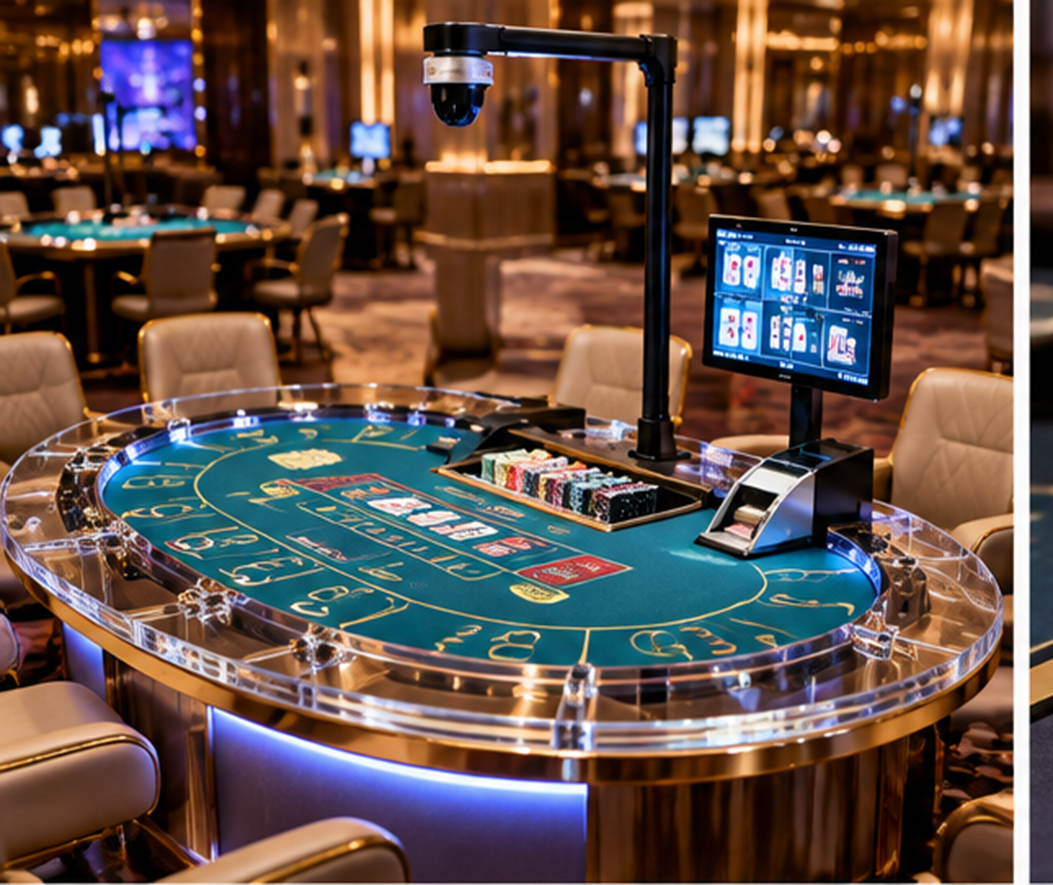
5. Playing Cards & Recognition Workflow

Playing cards - illustrative image.
Camera recognition workflow:
- Cards enter the defined recognition zone.
- Pole-mounted camera captures the card face at the configured angle.
- Vision engine detects the card and produces rank/suit plus a confidence score.
- Game logic builds the hand state and validates the dealing sequence.
- Recognized events are correlated with RFID bet information.
- Results, alerts and audit events become available to authorized systems.
6. RFID Chips
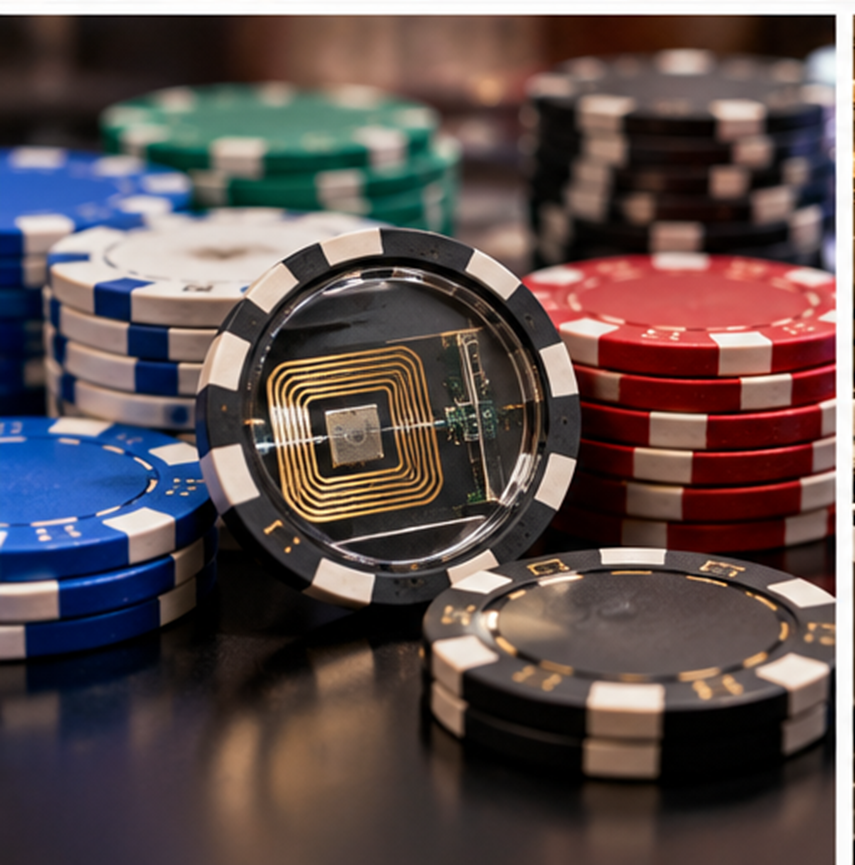
RFID casino chips - illustrative image.
Each RFID gaming chip can carry an electronic identity that compatible readers associate with configured chip information. Within a Smart Table deployment, RFID can support chip recognition in betting areas, table inventory visibility, transaction tracking and reconciliation workflows.
- Unique chip identification and denomination mapping.
- Simultaneous recognition of multiple chips in configured read zones.
- Bet-position and table-state correlation.
- Chip tray / float inventory support.
- Cage issue, return, redemption and reconciliation integration where deployed.
- Exception review for unknown, invalid or out-of-policy chip events.
7. Cage System Integration
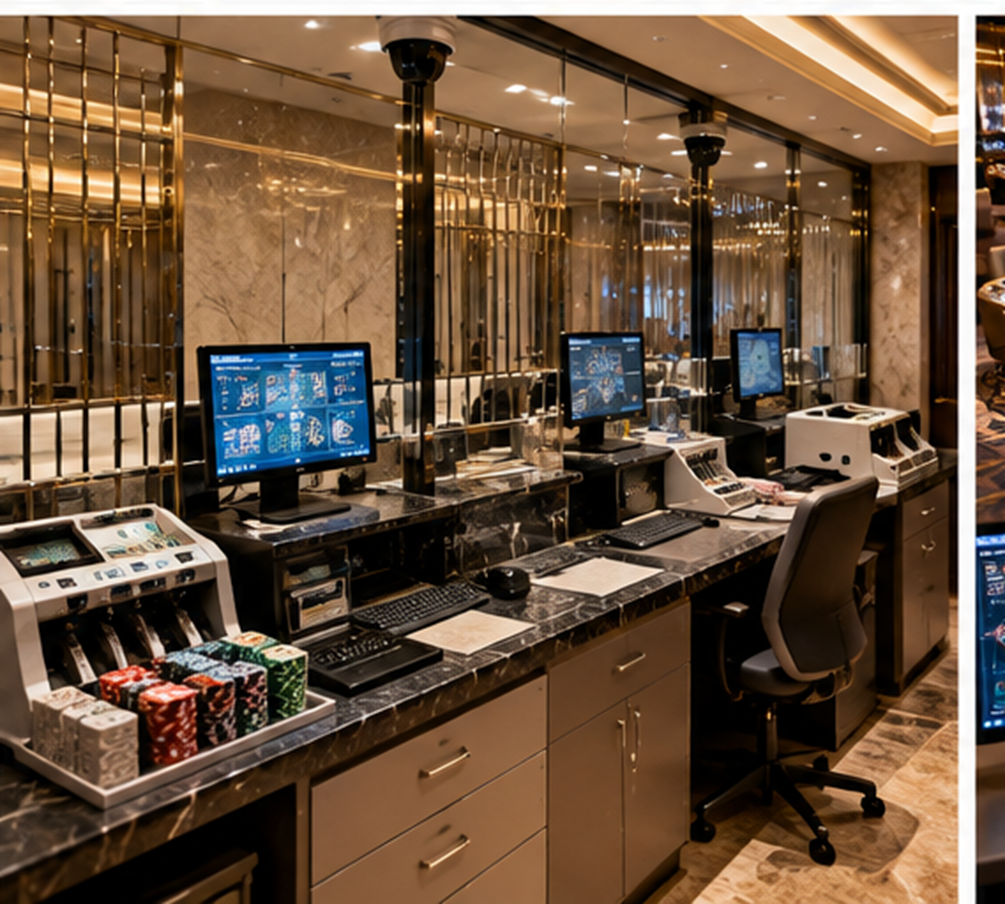
Casino cage and cashier technology - illustrative image.
The cage system extends RFID visibility beyond the gaming table. A connected design can support controlled chip issuance, redemption, inventory reconciliation and transaction review while preserving the casino's established authorization procedures.
- RFID chip validation and counting at authorized cage workstations.
- Chip issue and return records.
- Cashier transaction support and reconciliation.
- Table-to-cage chip movement visibility where readers are deployed.
- Central inventory and exception reporting.
- Integration with casino management, finance and surveillance workflows as approved.
8. End-to-End Workflow
|
BET |
CAPTURE |
RECOGNIZE |
VALIDATE |
SETTLE |
REPORT |
RFID bet placed → betting state locked → cards captured by Smart Shoe or pole camera → game logic validates hand/outcome → table events are recorded → analytics, surveillance support and cage/management workflows receive authorized data.
9. Casino Technology & Network Architecture
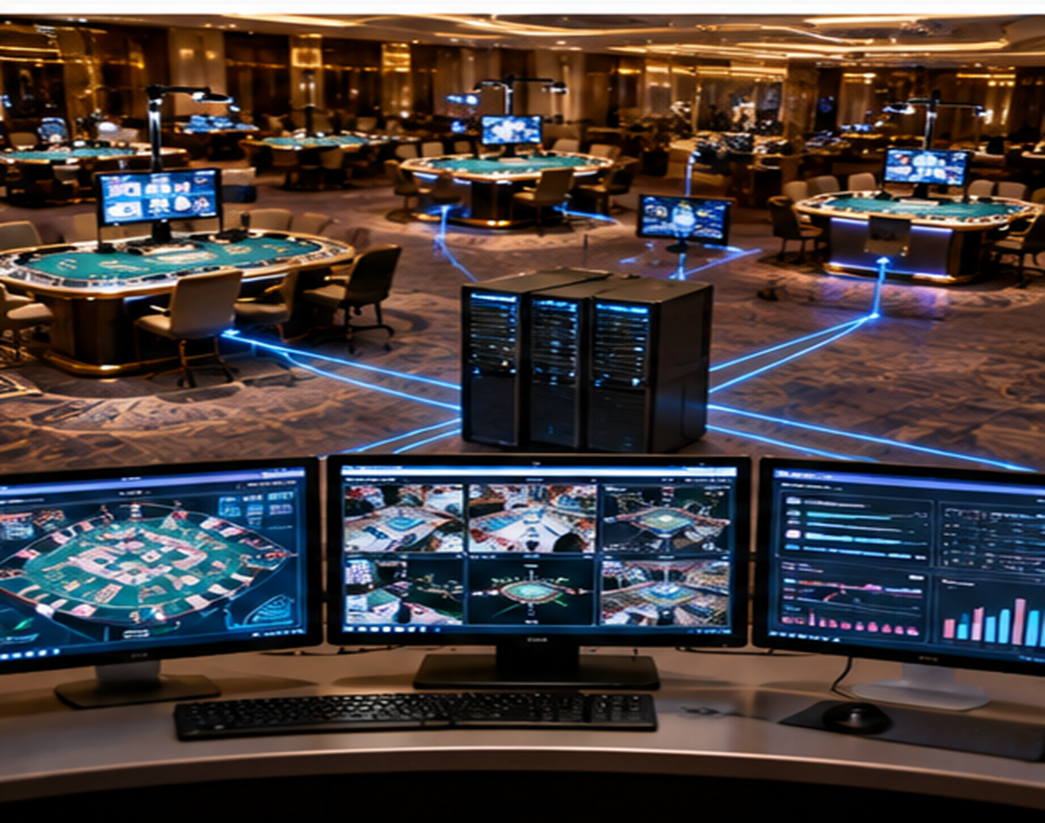
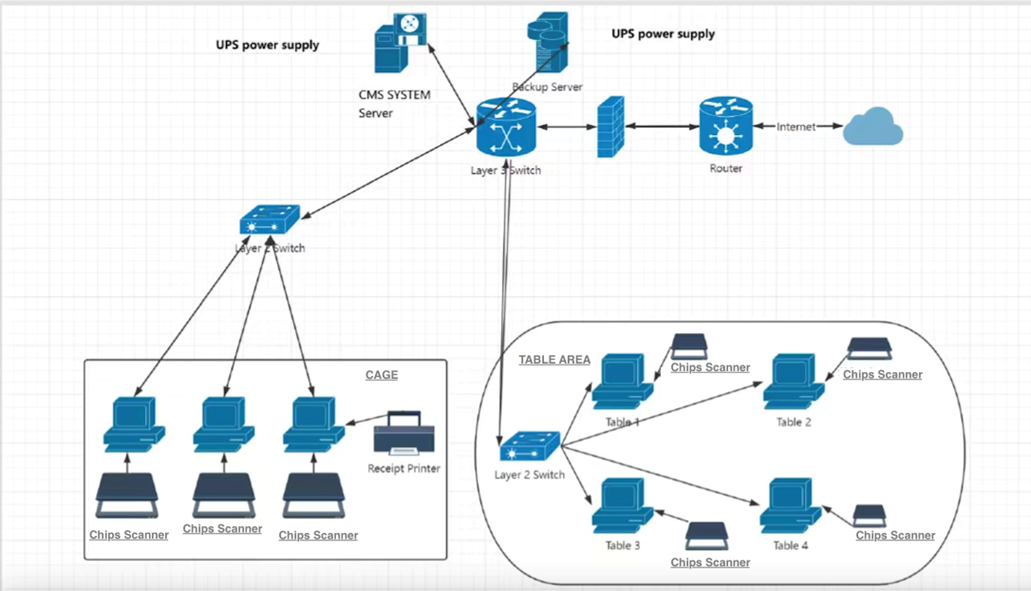
- Smart Table VLAN: controllers, RFID readers, displays and cameras.
- Application zone: recognition engine, game logic and API services.
- Data zone: operational database, event history and backups.
- Integration zone: CMS/table management, cage, surveillance and reporting.
- Security controls: network segmentation, least privilege, event logging, monitoring, backup/recovery and controlled change management.
10. Security, Integrity & Surveillance Support
- Time-synchronized game and device events.
- Role-based access for operations, technical support and administration.
- Device-health, communication and tamper-status monitoring.
- Exception alerts for inconsistent game, recognition or RFID events.
- Searchable event history for audit and investigation.
- Surveillance correlation points to help review relevant table activity.
11. Operations & Analytics
- Table online/offline and device-health status.
- Hands/rounds, game duration and table activity.
- Bet values and betting-position activity where configured.
- Recognition confidence and exception queues.
- Table utilization and agreed operational KPIs.
- Historical event search, reports and exports.
The final dashboard, KPIs and reports should be configured to the casino's approved operational and regulatory requirements.
12. Technical Support Capabilities
|
Capability |
Scope |
|
Site & Design |
Site survey, table layout, network/power assessment and deployment planning. |
|
Installation & Commissioning |
Table hardware, RFID readers, controller, display, camera pole, Smart Shoe and connectivity. |
|
Camera Calibration |
Field of view, card zone, lighting, focus, recognition confidence and exception tuning. |
|
Integration |
Smart Shoe/shuffler interfaces, network, APIs, CMS, cage and surveillance coordination. |
|
Testing & Acceptance |
Functional test, RFID read validation, card recognition, workflow and user acceptance support. |
|
Operations Support |
On-site and remote troubleshooting, diagnostics, preventive maintenance and health checks. |
|
Lifecycle Support |
Software/firmware support, spare parts, replacement procedures, training and documentation. |
13. Support & Escalation Model
- Level 1 - Site Support: first response, device checks, incident logging and dealer/operator assistance.
- Level 2 - Technical Support: RFID diagnostics, camera recalibration, network/application troubleshooting and component replacement.
- Level 3 - Engineering: software defects, recognition-engine issues, API/integration problems, root-cause analysis and controlled releases.
Support hours, response targets, spare-parts stock and escalation contacts can be defined in the deployment and maintenance agreement.
14. Pilot-to-Rollout Method
- Discover: confirm table game, operational procedures, RFID scope and interfaces.
- Design: finalize hardware, network, Smart Shoe/camera mode and integration architecture.
- Pilot: deploy a limited number of tables in the actual casino environment.
- Validate: measure RFID performance, card recognition, latency, exceptions and operational workflow.
- Rollout: expand in controlled phases with dealer/operator and technical training.
- Support: monitor, maintain, optimize and document production performance.
15. Overall Benefits of a Smart Table
The overall benefit of a Smart Table is the transformation of a traditional live table into a real-time, data-driven, secure and measurable gaming operation while preserving the live dealer and player experience.
Better Decision-Making - More timely operational data helps management act on table performance, security events and resource requirements.
Scalable Casino Integration - Can connect with cage systems, surveillance, table-management platforms, player systems, reporting tools and other approved casino systems.
Flexible Card Recognition - Supports direct Smart Shoe capture or pole-mounted camera recognition when a conventional shoe is retained.
Management Analytics - Provides operational KPIs for table utilization, betting activity, game speed, exceptions and performance analysis.
Faster Reconciliation - RFID information can support chip counting, table inventory, fills/credits, cage transactions and shift-end reconciliation.
Better Surveillance Support - Timestamped table events help surveillance teams locate and review relevant activity faster.
Higher Operational Efficiency - Central dashboards allow authorized teams to monitor multiple tables and device conditions more efficiently.
More Accurate Game & Player Data - Provides stronger information on betting activity, game duration, table utilization and, when integrated with approved player systems, player activity.
Reduced Human Error - Automated event capture reduces reliance on manual recording and repetitive table reporting.
Better Chip Control - Improves visibility of table float, chip inventory, fills/credits, movement and reconciliation between the gaming floor and cage.
Improved Game Security - Supports identification and review of unusual chip movements, unrecognized chips, event discrepancies and other exceptions.
Real-Time Game Visibility - Captures bets, cards, game results, table activity and device events through RFID, Smart Shoe or camera recognition.
"The Smart Table converts every game, bet, chip movement and card event into actionable digital information - improving security, operational efficiency, game visibility, player service and management decision-making."
16. Value Proposition
The Smart Table architecture is designed to provide a flexible path to live-table digitization: Smart Shoe where direct electronic card capture is preferred, pole-camera recognition where a conventional shoe must remain, RFID for chip/bet visibility, and cage integration for a broader chip-management workflow.
CAPTURE THE GAME • UNDERSTAND THE TABLE • SUPPORT THE OPERATION
17. What It Takes to Make Our Smart Table a Market-Leading Solution
To become a market-leading solution, the Smart Table must go beyond basic RFID recognition. It should operate as an integrated casino intelligence platform built around five strategic pillars: Smart Gaming, Security, Analytics, Surveillance Integration and Open Integration.
Five Strategic Pillars
Smart Gaming — Near-perfect bet and chip recognition, Baccarat-first capability, dealer-friendly operation, reliability and fast maintenance.
Security — Game integrity, anti-fraud controls, cybersecurity, exception management and complete auditability.
Analytics — Real-time operational and financial visibility including GGR, turnover, hold, average bet, game speed, utilization and exceptions.
Surveillance Integration — Precise event-to-video correlation using table, hand, dealer, player position, wager, cards and timestamp.
Open Integration — Documented APIs and interfaces for CMS, loyalty, cage/treasury, surveillance, reporting and third-party systems.
Real-Time Float Inventory & Player Tracking
Real-Time Float Inventory — The Smart Table should continuously monitor the table's chip float using RFID information, providing authorized operations and cage personnel with a near-real-time view of chip quantities and values by denomination. This supports table opening, fills, credits, shift changes, closing, reconciliation and exception detection.
- Live table float value and chip count by denomination.
- Opening float versus current float visibility.
- Automatic recording of fills and credits when integrated with approved workflows.
- Alerts for unexplained or abnormal chip movements.
- Faster table-to-cage and end-of-shift reconciliation.
- Historical float movement and audit trail for authorized review.
Player Tracking — When connected to the casino's authorized player tracking or loyalty system, the Smart Table can associate rated play with the correct table and player position, helping create more accurate and timely player activity records without increasing dealer workload.
- Player identification through the casino's approved card, account or tracking method.
- Player position and session start/end association.
- Average bet, turnover, game duration and betting activity.
- More accurate player-rating information for loyalty and host systems.
- Real-time visibility for authorized casino operations and player-development teams.
- Integration with CMS, loyalty, analytics and reporting platforms through approved APIs.
- Role-based access and privacy controls for player information.
TABLE INTELLIGENCE = GAME DATA + REAL-TIME FLOAT + PLAYER ACTIVITY
Baccarat as the Showcase Product
Because Baccarat is particularly important in Asian casino operations, the Smart Table should demonstrate its strongest capabilities through Baccarat. The target experience is a fast, dealer-friendly game with automatic card and bet recognition, result verification, payout validation, side-bet support, road-map display, detailed hand history and direct exception correlation with surveillance.
PAGCOR-Approved Pilot: The Proof Layer
Proven field performance should sit across all five strategic pillars. The pilot should convert technical claims into measurable casino evidence.
- Accuracy — RFID read rate, bet-position accuracy and card-recognition performance.
- Uptime — system availability, recovery performance and offline synchronization.
- Game Performance — hands per hour, processing latency and impact on dealer workflow.
- Security — exceptions detected, audit completeness and investigation support.
- Business Value — operational savings, table utilization, management visibility and measurable efficiency gains. Pilot reporting should also measure float-inventory accuracy, reconciliation improvement and player-tracking accuracy where these functions are enabled.
“Our objective is not simply to build a Smart Table. Our objective is to create an integrated casino intelligence platform that makes every game more secure, measurable, efficient and connected.”
.